Transverse Hall-effect probe — TESLA Premium model
- Card or bank transfer payment
- Net prices, VAT not applicable
- Shipped within 2–3 business days of payment
Not sure which one? Read our buying guide →
Ref. TG-PREMIUM-SONDE-RADIALE
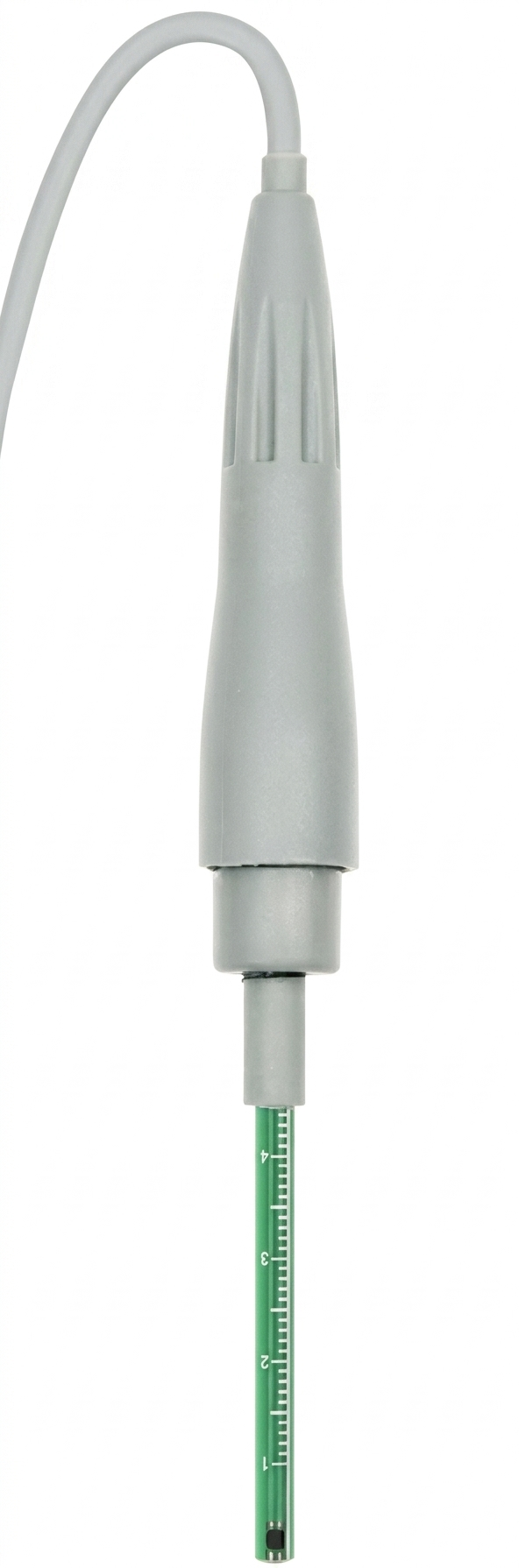
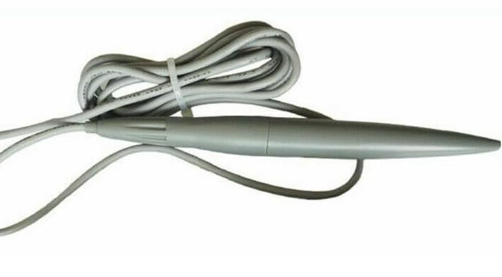
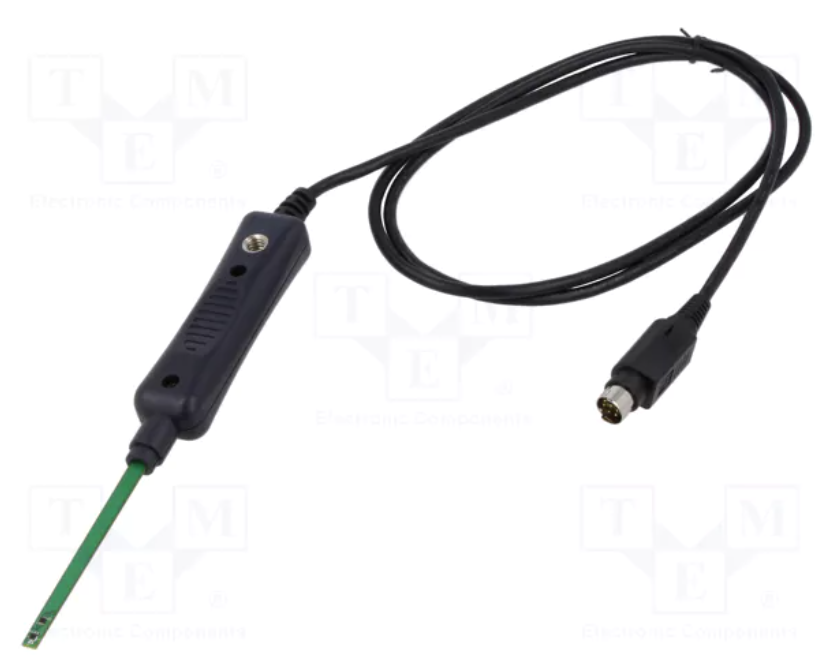
This Hall-effect probe connects to the TESLA-Premium gaussmeter. It is a transverse probe and is used to measure a magnetic field.
This Hall-effect probe can measure up to 20,000 Gauss (2 Tesla) and works equally well on permanent magnets and electromagnets.
Technical specifications:
Ideal for use on magnetic plates, magnetic bar separators, sorting magnets, recycling overband magnets, lifting or clamping electromagnets and, more generally, any magnet or electromagnet that does not generate frequency or eddy currents.
If you would like the Hall-effect probe to come with a certificate of conformity, please remember to request it when ordering.
Tips:
- Remember that the air gap is the enemy of magnetic performance. Make sure to remove any impurities stuck to the probe's sensing element. Likewise, clean your magnetic equipment properly. For example, a 1 mm gap between a neodymium magnetic device and the probe sensor can mean a loss of 1,000 Gauss (0.1 T).
- The temperature of the magnet or electromagnet itself directly affects the maximum flux density Br it can deliver. Periodic readings taken on magnetic equipment must be made at the same temperature.
- The quality of a flux density measurement in contact with a magnet or magnetic system also depends on the person taking it. Patience is important to find the point where the flux density is strongest.
- Any work in an area where a magnetic field is emitted must be carried out by qualified personnel, in accordance with the regulations in force on protecting the health of workers exposed to magnetic fields.